Rotation and Rolling
Rotation and Rolling
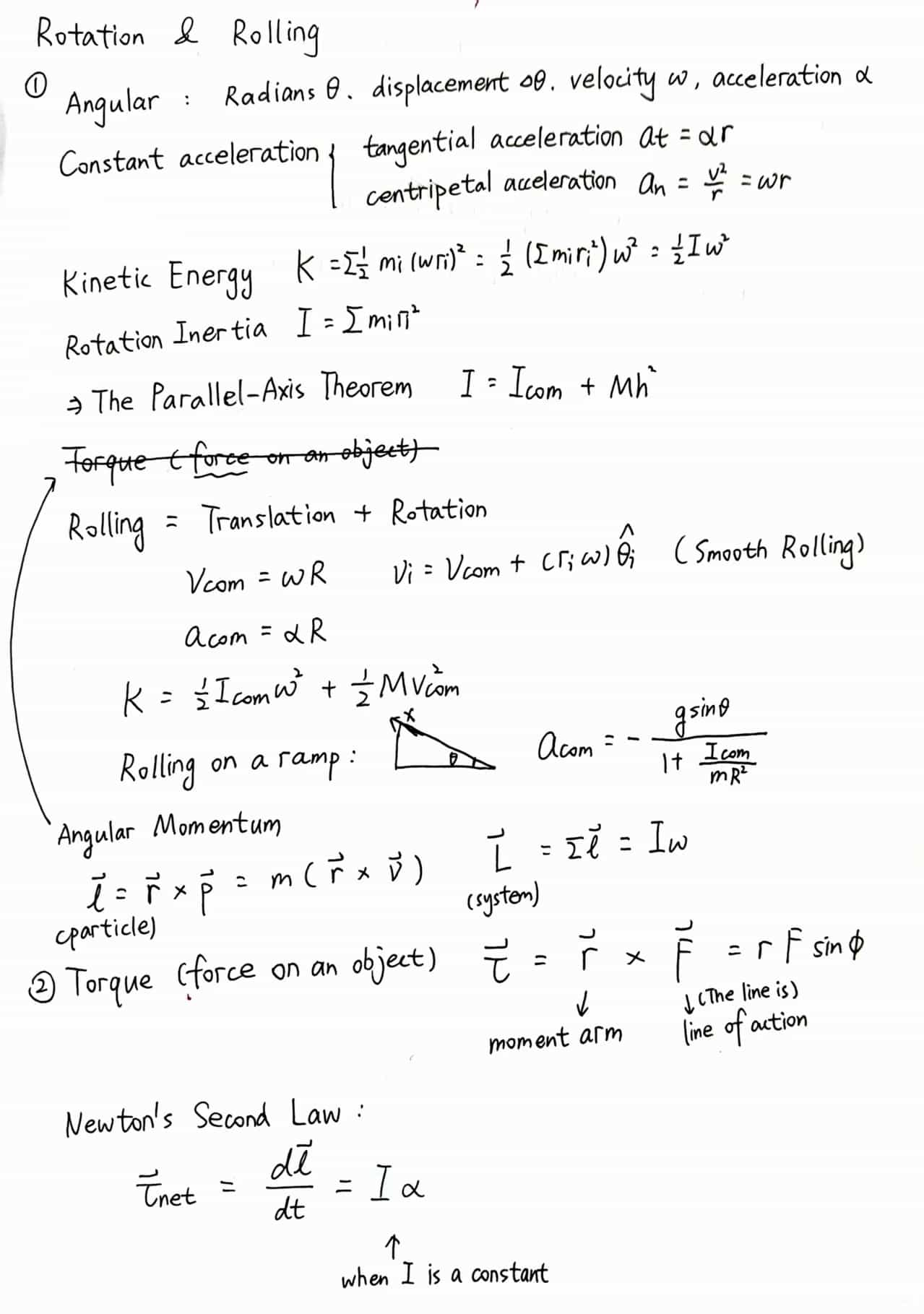
Angular Kinematics
- Angular Variables:
- Radians:
- Displacement:
- Velocity:
- Acceleration:
Constant Acceleration
For an object undergoing constant angular acceleration, the linear accelerations are:
- Tangential acceleration:
- Centripetal acceleration:
Rotational Dynamics
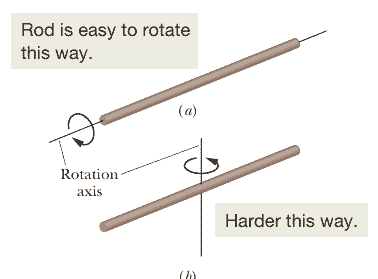
Kinetic Energy and Rotational Inertia
The kinetic energy of a rotating rigid body is derived by summing the kinetic energies of its constituent particles:
Rotational Inertia (Moment of Inertia):
The Parallel-Axis Theorem
For a rigid body of total mass rotating about an axis parallel to an axis passing through its center of mass (COM) at a distance :
Rolling Motion
Rolling motion can be decomposed as a combination of Translation and Rotation.
- Velocity of center of mass:
- Acceleration of center of mass:
For Smooth Rolling, the velocity of a particle on the object is:
The total kinetic energy of a rolling object is the sum of its translational and rotational kinetic energies:
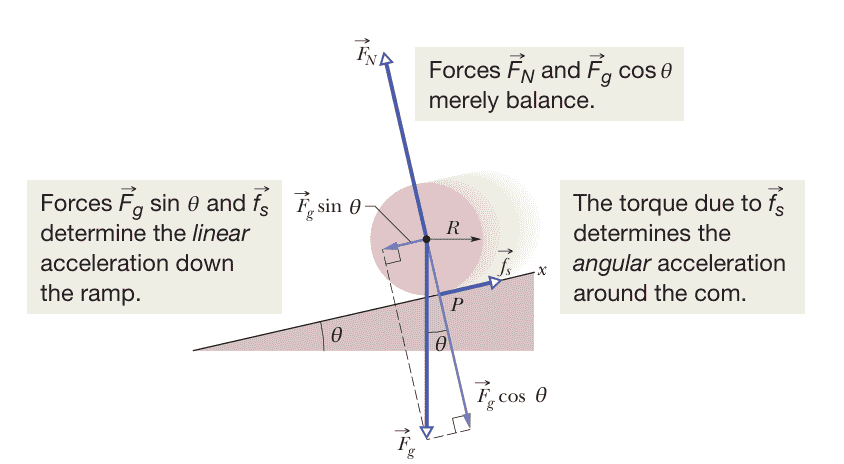
Rolling on a Ramp
For an object rolling down an incline of angle , the acceleration of its center of mass is:
Torque
Torque is the rotational equivalent of force on an object.
- Moment arm:
- Line of action: the line along the force vector
Newton’s Second Law for Rotation
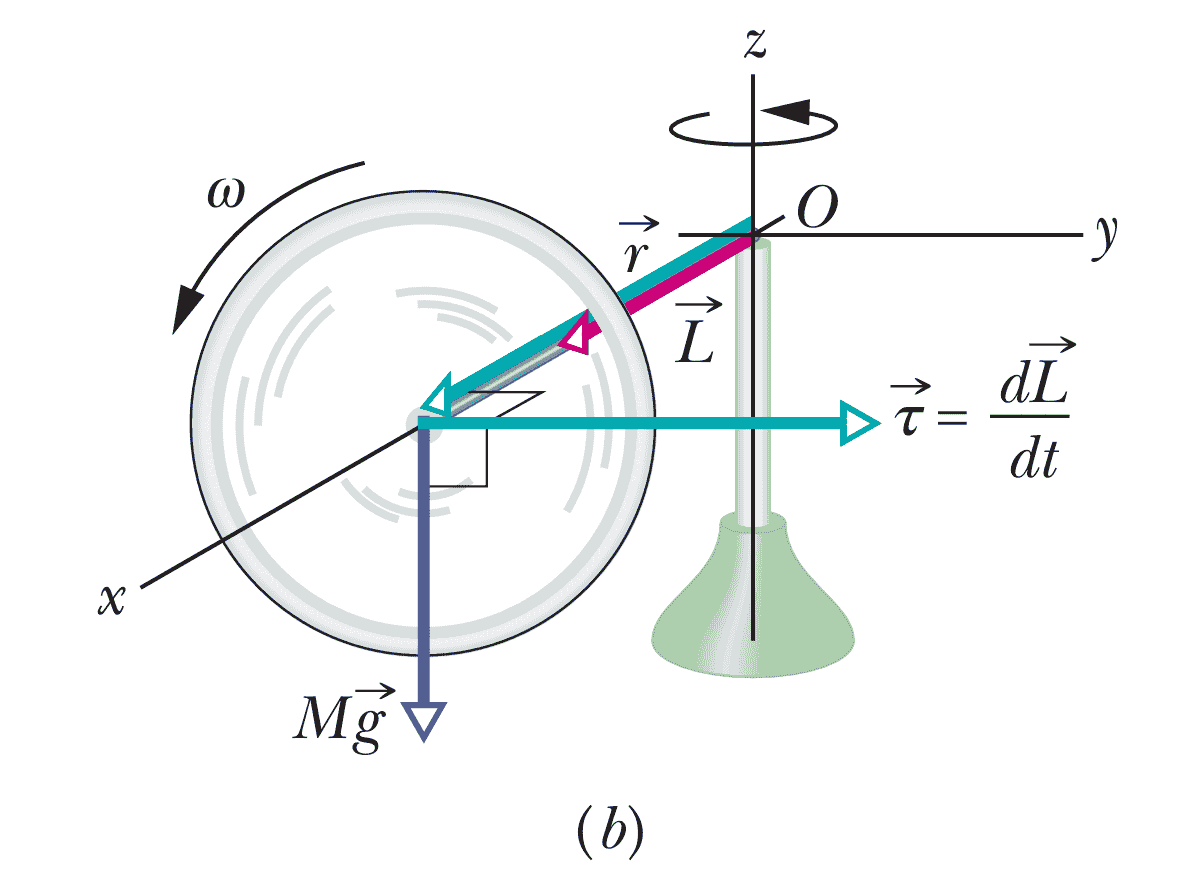
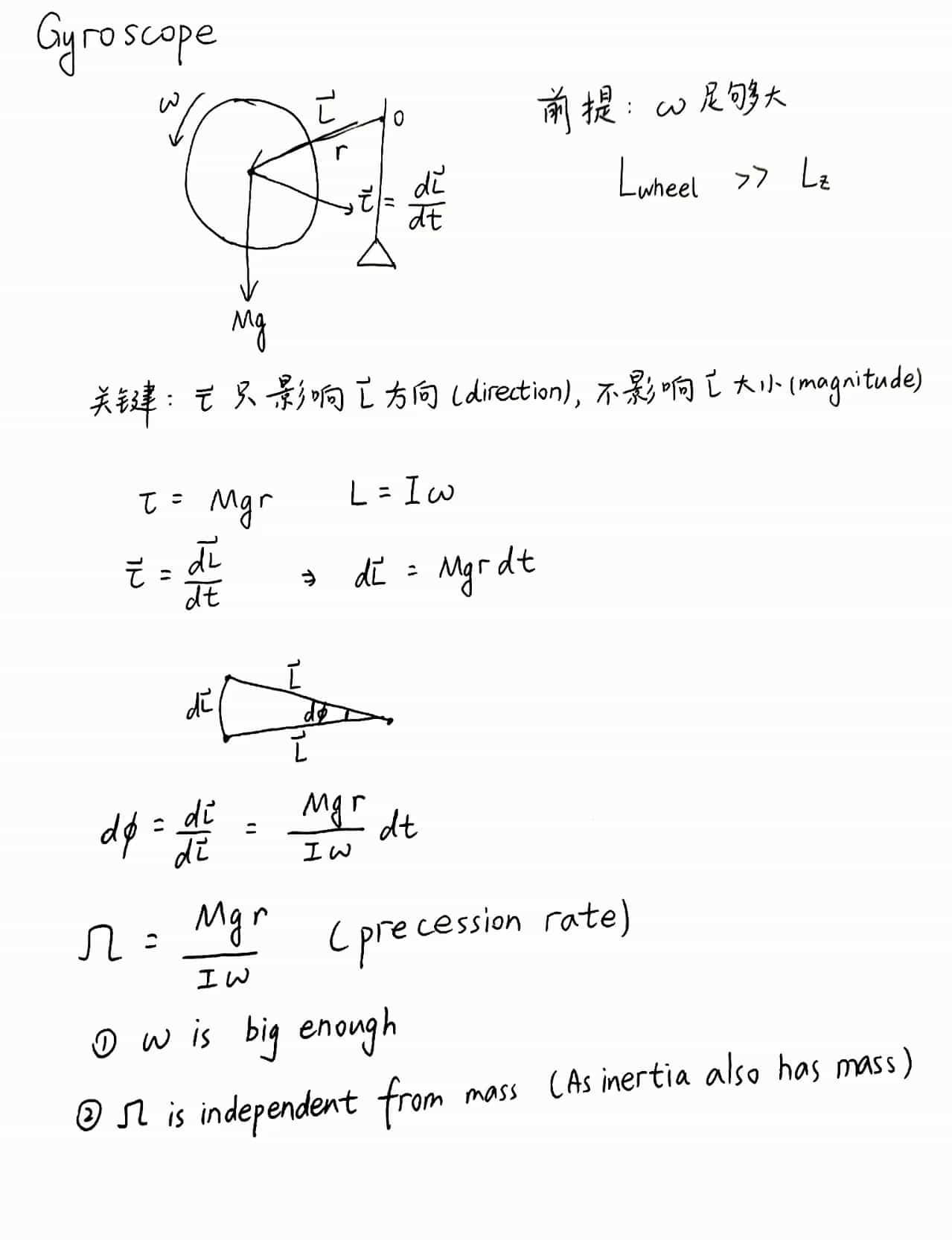
The net torque on a system is equal to the rate of change of its angular momentum:
This relation holds when is a constant.
Angular Momentum
-
For a single particle:
-
For a system:
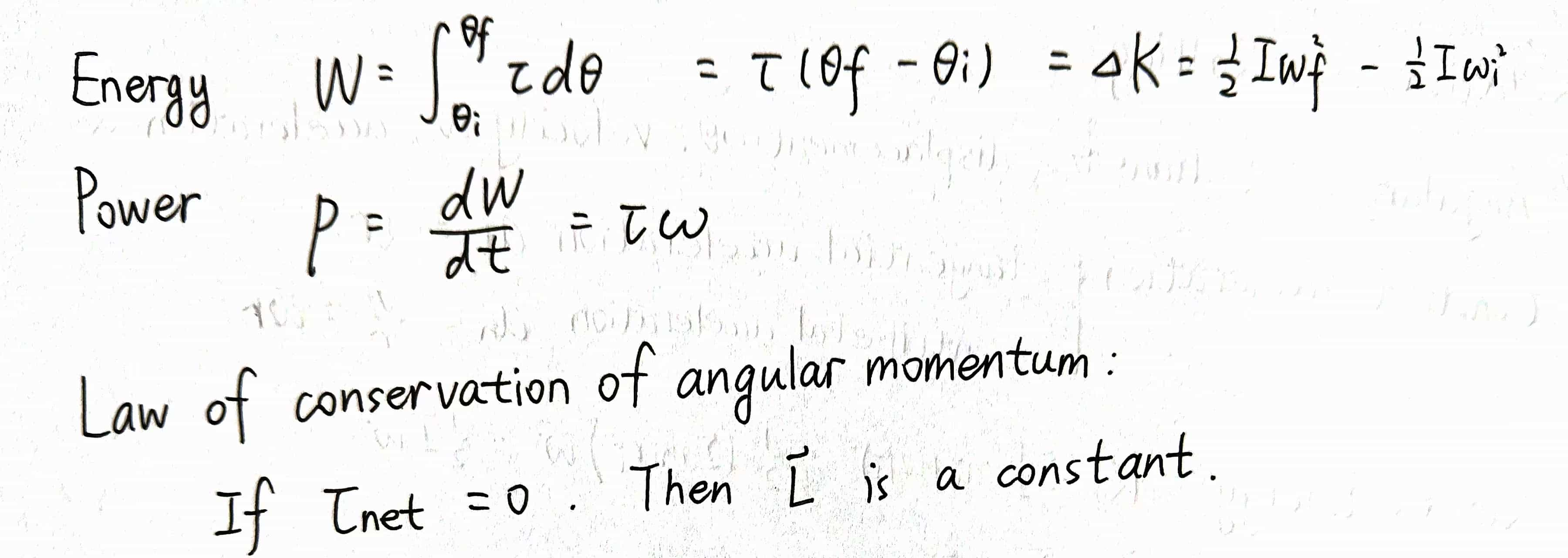
Work, Energy, and Power in Rotation
-
Work:
-
Power:
Conservation of Angular Momentum
Law of Conservation of Angular Momentum:
If the net external torque is zero (), then the total angular momentum of the system is conserved: