Honors General Physics I - 1 : Measurement & Motion and Vectors
Honors General Physics I - 1 : Measurement & Motion and Vectors
周桐 Benjamin | Advanced Materials in Quantum Science
A few theory predictions got experimentally verified
email : tongz@hkust-gz.edu.cn
Office Hour: Tu 14 - 16 | Office: Rm 602, E4
Mr. Tengfei Ying : tying937@connect
Mr. Junjie jlei827@connect
Lab : Mr. Zehao OAn Office E2 231A
Course Info
Physics I: classical mechnics, fluid mechanics, astrophysics, thermodynamics,
Physics II : electromagnetism, optics, modern physics
Only go refer to the textbook
Try to challenge the textbook notion
Description
Calculus-based
Key :
- Newton’s laws of motion : deduce from calculus
- Energy & Kinear momentum conservations
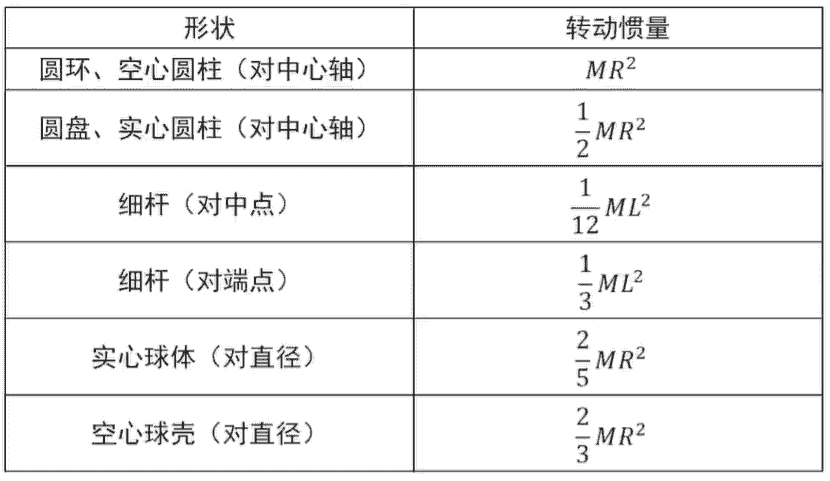
- Rotational motion (Important in quantum major)
- Oscilaation & waves (Every signals are transformed in waves)
- Gas laws and kinetic theory of gases
- First and second laws of thermodynamics
No midterm and final exam
M1 : Mechanic Basics
M2 : Energy and oscillations
M3 : Thermodynamics
3 exams, 3 labs sessions
Exam 1 : Oct. 17 9am - 11am.
Exam 2 : Nov. 14 9am - 11am.
Exam 3 : Arranged by ARS
First Tutorial on Sep.15 on Week 3
There will be a paper form homework, AI will also do the grading.
Final Grade = 35%(M1) + 35%(M2) + 30%(M3)
Modulec Grade :
- In-class quiz : 10%
- Written assignment : 20% (10% traditional HW + 10% AI tutor system)
- Lab reports : 20%
- End-modulus exam : 50%
will NOT be assigned on curve
5 quizes in total : M1 Week 4 (2 quizzes); M2 Week 8 & Week 9; M3: Week 12; (4 points per each quiz)
Possible flip-classroom exercise in week 13 (thermaldynamics), present for 10 mins per person
How to master
Richard Feynman : Don’t fool yourself
Measurement
SI : International System of Units
Prefixes Table :
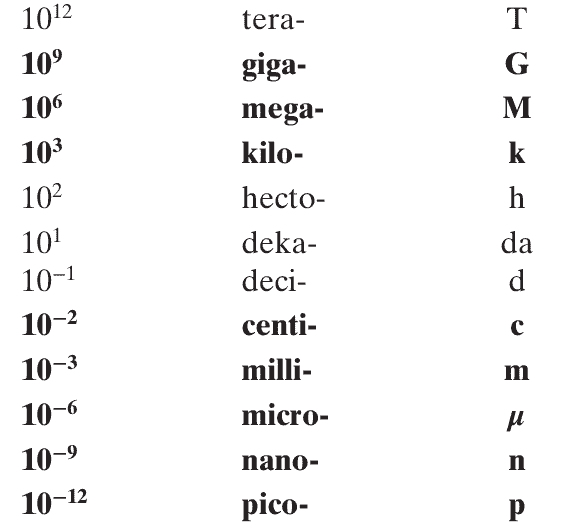
Terahertz : 太赫兹
Terahertz gap : a big issue in information
Change Units :
- Chain-link conversion
- Scientific notation
- significant figures (Usauslly the 3 digits) : give the sense to error for presicion
Length:
Definition: north pole to equator -> wavelengths of Kr-86 -> a time interval of light
Time
Mass and density : Atom >> Proton >> Electron
Motion and Vectors
For a move things:
- Position
- Displacement : vector quantity
State of Motion:
- Average velocity : Slope of the whole process
- Average speed : no direction
Instantaneous velocity and speed :
It is also a vector :
So it has direction and magnitude (which called speed)
Acceleration
The instantaneous acceleration:
Unit:
Constant acceleration
First basic equation(velocity) :
Second basic equation (position)
Integration :
So it depends on the interval
where is called the integrand
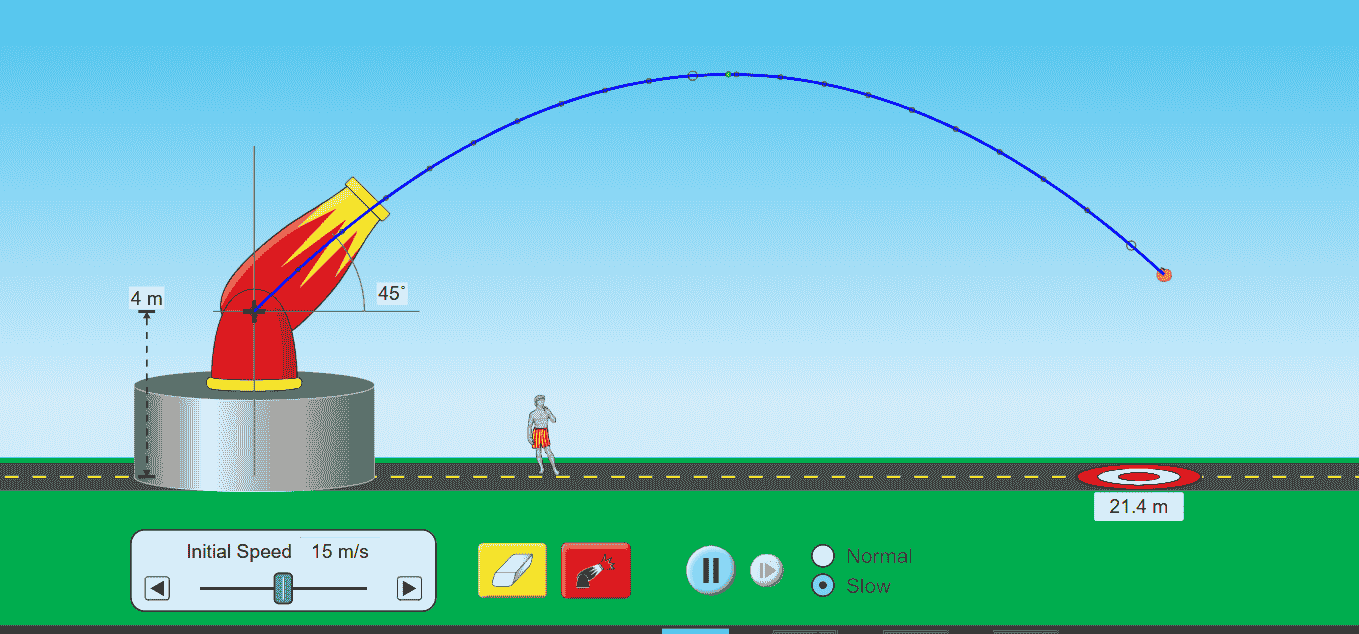
Free-fall acceleration
Graphical Integration
Vector and scalars
Components of vectors
Multiplying vectors
Cross/Outer product :
, Right-hand rule