
[Lecture Note] From Predictive to Prescriptive : Autonomous Maintenance Operation through Failure Twins
[Lecture Note] From Predictive to Prescriptive : Autonomous Maintenance Operation through Failure Twins
[Background] Evolution of maintenance
- Indstry 5.0 : human-centirc, resilient, sustainable
- (What has happened?) Scheduled maintenance : Historic data, assessment (risk and benefits)
- (What is happened?) Condition-based maintenance (CBM)
- (What happened, What is happening and what will happen?) Predictive maintenance (PdM) : detection, diagnose, predict
- (What should be done to make something happen?)
PdM (GEneral Processs of Predictive Maintenance)
Physic robot
data
Online Monitoring
Data processing
Prediction model
Deep learning model have bocome the SpA of PdM
However,
- Require a large amount of labled training data
- Lack of physical explanation
- Real : lack physics-baed failure behaviour model
Prescriptive maintenance : State-of-the-att
Most of PsM is passive:
- Prescribing the maintence
Existing PsM is based on stochastic correlation, but not true causal relationship
To discuss Today
Introduction : digital failure twin
Modeling : DFT modeling considering multiple dependent failure behaviors
Updating :
- Parameter updating considering
Decison supports (3) PsM:
- RUL-aware control
- PsM based on causal inference
- AI-driven planning and control of robots
Discussions of a few ideas
What is a digital twin, and Why?
What is a digital twin?
simulation models ? monitoring and visualization ?
- Digital model (standard simulation model) Not communication to physical world
- Digital shadow : Putting census
- Digital twin : always catch
Very few papers focus on the third level
Why moving from digital twin to digital failure twin
- traditonal digtial twins focus mainly on normal system behaviors
- Failure and Reliablity
- One happened, other will often happen
Digital failure twin mdeling
- reference
- dependence
- efficient
Reference Model
is like a road map
5 :
- digital model
- Failure behavior model
- Data and knowledge
- Connection and updating
- Decision and control
failure behavior modeling
Evolition:
- Empirical model : Not concerning the clause, just collect the failure data
- State/time-based model : logical combination of components
- Health indicator model : more details, identify, check the degradation, continuous state failure
- Hybrid system mode
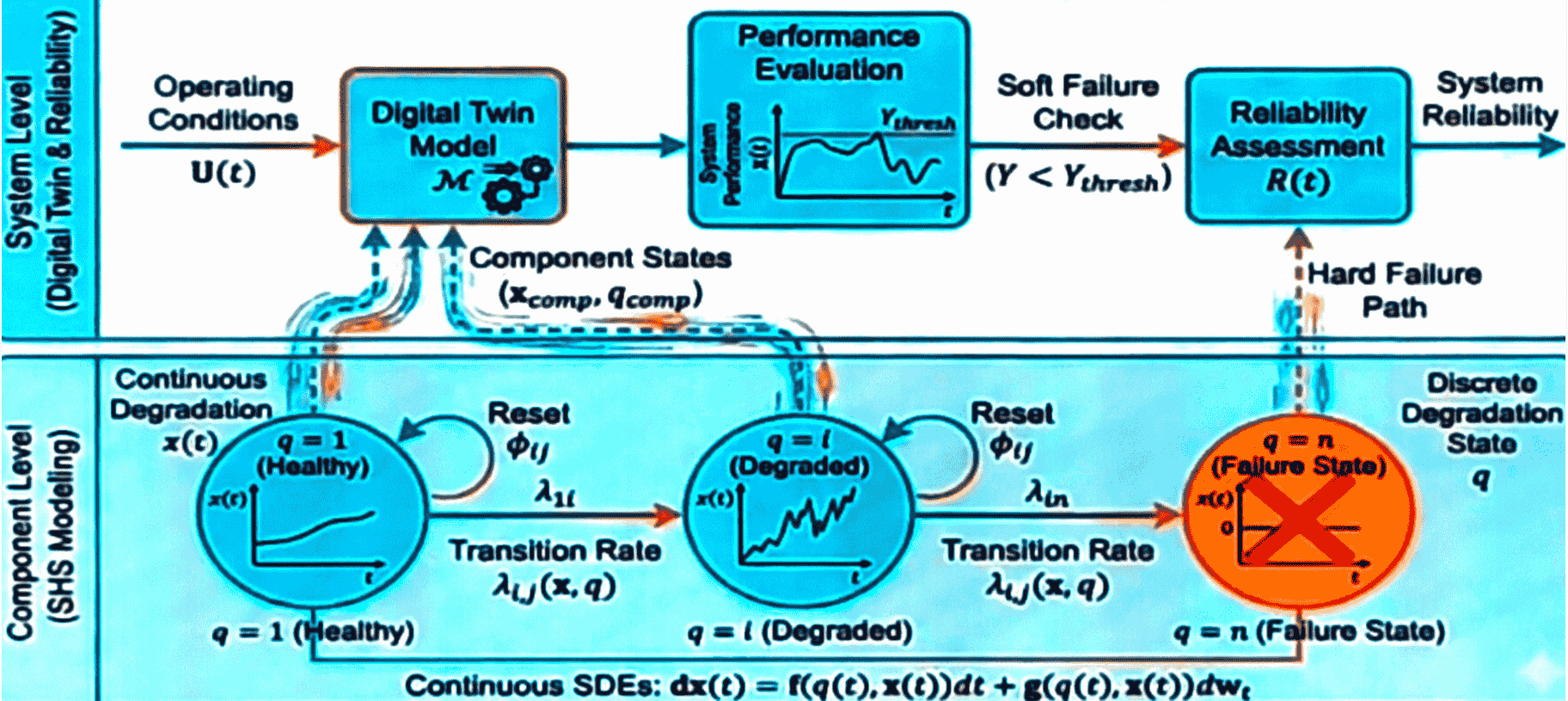
Stochastic hybrid system modeling of dependent failure ehavior
model curve + disctrete : continuous and discrete
Efficient estimation of reliability through moment closure
Semi-analytical analytics
A contrete example :
Updating the digital failure twin
- unable to guarantee 100% accurate
Sim-to-gaps : Motivating example
Developing the digital change
Diagnose catch things in 3-dimensional space
And to use to train a new model
Many monitor
General approach : Simulation model to train deeper model and then evaluate
Obervations :
- perform well on the validation set, but drops significantly on real-world
Update I : Alignment by model
Add a error block, to change the parameter
To collect the real-data
Re-run
Accurary: 60% - 73%
Update II : Alignment by algorithm
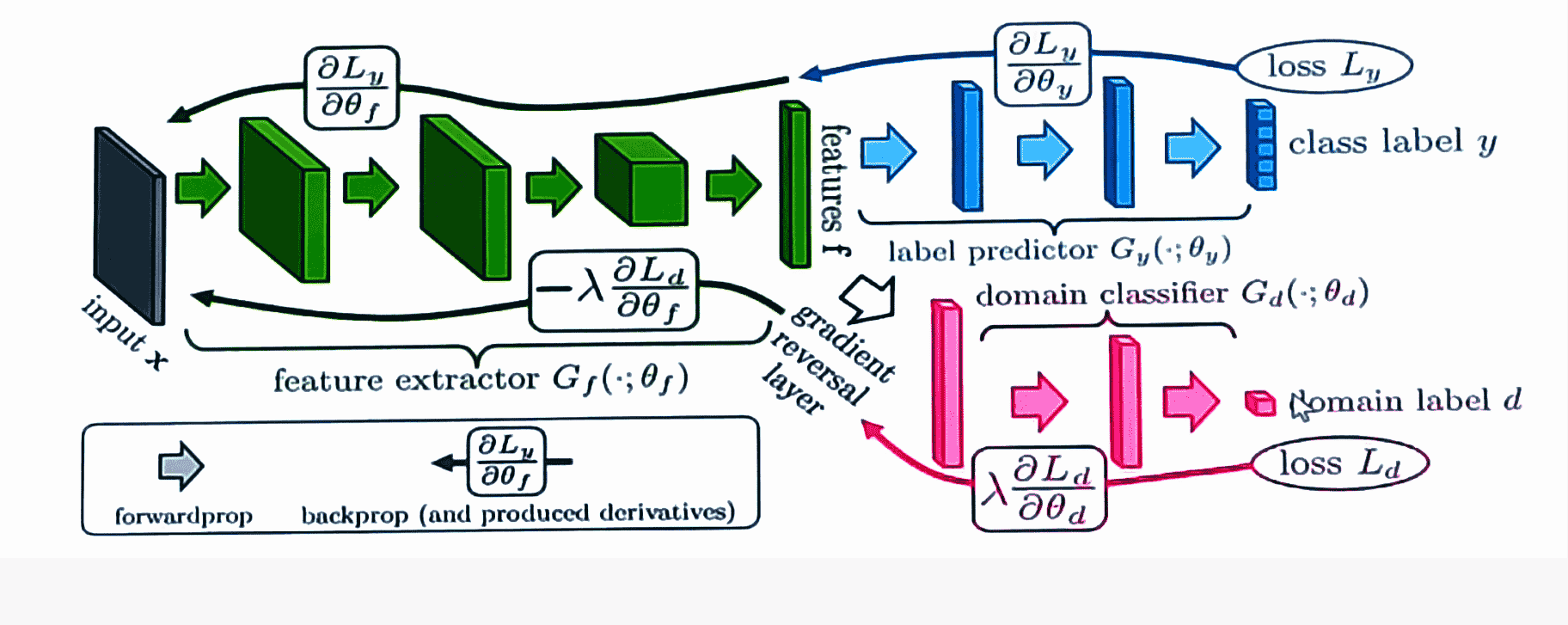
Magic : Blue as accurate as possible, Pink as inaccurate as possible (try to confuse)
Ideal : Pink one become completely confuse
No difference between sitmulation and reality
Improve : 85%
Prescriptive maintenance based on DFT
decision model, full real-time, can be address better and send back
RUL-aware control : Current challenge of robot motion planning
- Conventional path planning cannot perceive motor degradation
Satisfy the constraint
Optimization problem : minimaxing the energy consumption
Different motor more, more available
Need to maintain different motor at different time
Idea : Cost function in RRT*
This is called Path length
Get a hign penalty to prohibit do that
PsM based on causal inferene : Problem settings
To inspect the transformer
To detect the frequency
Collect the obervation data, the core-relation
Data tells the more frequent, shorter lifetime.
Why ? Confining effect.
How to correct ?
Reliability modeling based on propensity score matching
Most similar, and compare
Prescribe, approach much better
Intelligent AI agent for resilience planning and control
Really think why it fails