
基数排序 + 树状数组:2026暑杭电多校 1-08 数字子序列
基数排序 + 树状数组:2026暑杭电多校 1008 数字子序列
考虑每个数字串的长度 , 显然有
然后我们从 1 开始计算 , 记为以 为末尾字符串,最长上升整数序列长度。
有两种转移:
-
前面长 ,现在长 ,这个跑一遍就行
-
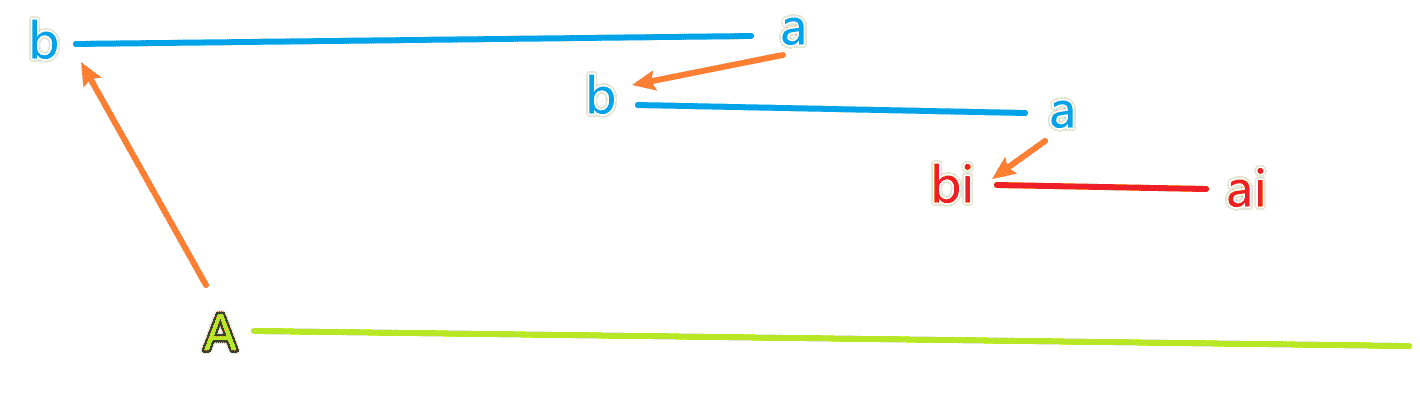
上一个(以 开头)长 ,这个长
我们考虑 要满足的条件:
由于我们 是从小到大枚举的,所以上面可以直接使用基数排序即可(类似SA的思想)
(注意,我们不能一开始就排好序,因为当两个串如果前 个字符相同,即使第 个字符不同,我们也必须先按限制 1 来排序)
维护最大值拿个树状数组即可。
1 |
|
本博客所有文章除特别声明外,均采用 CC BY-NC-SA 4.0 许可协议。转载请注明来源 zhangxixi的博客!
相关推荐

2021-11-18
【P2344 [USACO11FEB]Generic Cow Protests G】题解
本文搬运自本人初中博客园博客,若图片加载不出来,可到原文查看:https://www.cnblogs.com/zhangtingxi/p/15574309.html 题目链接 首先朴素dp不用讲,设 dpidp_idpi 表示前 iii 个数划分的总方案数,SiS_iSi 表示前 iii 个数的和。 dpi=∑j=0i−1dpj (Si−Sj⩾0)dp_i=\sum_{j=0}^{i-1}dp_j\,\,\,(S_i-S_j\geqslant 0) dpi=j=0∑i−1dpj(Si−Sj⩾0) 其中 dp0=1dp_0=1dp0=1。 可是这样的时间复杂度为 O...
2026-10-02
推性质 + 很多个DS:ICPC2025西安A
推性质 + 很多个DS:ICPC2025西安A Azalea Garden - Problem - QOJ.ac 我们考虑 aaa 最大的那个人 iii,显然除了它自己本身,所有 bj≤aib_j\le a_ibj≤ai 一定可以被杀死,所有 bj>aib_j>a_ibj>ai 一定杀不死 因此问题就剩下一个,它自己能不能被杀死? bi>aib_i>a_ibi>ai 显然不能 接下来,我们考虑所有 bj>aib_j>a_ibj>ai 的生物,它们显然最后会一直存活。考虑它们当中 aaa 的最大值 AAA 如果 A...

2021-11-14
【洛谷P2184 贪婪大陆】题解
本文搬运自本人初中博客园博客,若图片加载不出来,可到原文查看:https://www.cnblogs.com/zhangtingxi/p/15553942.html 题目链接 题外话: 这题应该没有蓝题难度吧,就是道树状数组模板题+一些小思维 利用前缀和思想,答案很明显为 rrr 之前的区间总数- lll 之前的区间总数,即 rrr 之前的左端点数目- lll 之前的右端点数目。分别用两个树状数组维护即可。 时间复杂度 O(nlog2n)O(n\log_2n)O(nlog2n)。 1234567891011121314151617181920212223242526272829...

2026-06-30
树链剖分+树状数组:ABC 460 G
树链剖分+树状数组:ABC 460 G 本文搬运自本人高中时期CSDN博客,若图片加载不出来,可到原文查看:https://blog.csdn.net/zhangtingxiqwq/article/details/162444175 https://atcoder.jp/contests/abc460/tasks/abc460_g 考虑直接树剖 单点权重修改是容易的 单点颜色修改,往上更新是容易的,但往下合并不容易,把下方值往上传亦不容易 但如果往下合并的值提前记录好了呢? 我们可以多定义一个 懒标记 ,代表这个点所有与它本身颜色不同子节点的值的和 利用这个懒标记,我们即可实现颜色翻...

2023-10-25
树上形态改变统计贡献:1025T4
树上形态改变统计贡献:1025T4 本文搬运自本人高中时期CSDN博客,若图片加载不出来,可到原文查看:https://blog.csdn.net/zhangtingxiqwq/article/details/134039125 http://cplusoj.com/d/senior/p/SS231025D 答案为 ∑w[x]−w[son[x]]\sum w[x]-w[son[x]]∑w[x]−w[son[x]] , xxx 非儿子 要维护断边,LCT固然可以,但不一定需要 发现如果发生了变化,只会由重儿子变成次重儿子 所以我们首先要维护次重儿子 同时我们拿树状数组维护其所有祖先的...
2022-05-24
【CF827C DNA Evolution】题解
本文搬运自本人初中博客园博客,若图片加载不出来,可到原文查看:https://www.cnblogs.com/zhangtingxi/p/16306588.html 题目链接 题目 DNA链由核苷酸组成。有四种类型的核苷酸:“A”,“T”,“G”,“C”。 DNA链是核苷酸序列。科学家决定追踪一种稀有物种的进化,它最初的DNA链为s。 物种的进化被描述为DNA的一系列变化。每个变化都是某些核苷酸的变化,例如,DNA链“AAGC”中可能发生以下变化:第二个核苷酸可以变为“T”,然后变成“ATGC”。 科学家们知道DNA链的某些片段会受到某些未知感染的影响。这些感染可以被表示为核苷酸序列...