
[Lecture Note] Positional Source Coding for Sparse Data
[Lecture Note] Positional Source Coding for Sparse Data
Motivation
The data regime has changed:
- High-dimensinal
- Structured
- Large-volume
- Unknown distribution
Sparse and Structured Data are everywhere:
- images and video
- event-triggered sensing and cyber-physical systems
- Large learning models and distributed learning
From data to bits : why source coding ?
Source-Coding Fundations
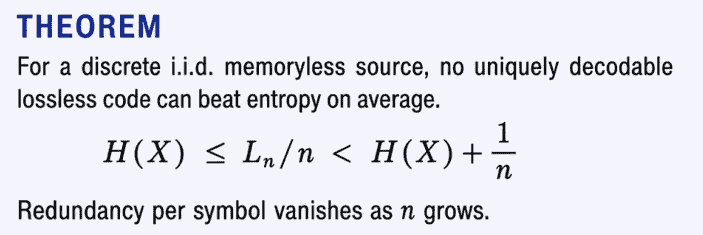
Theorem :
Claude Shannon
Fixed-Length Binary Representation – Simple but wasteful
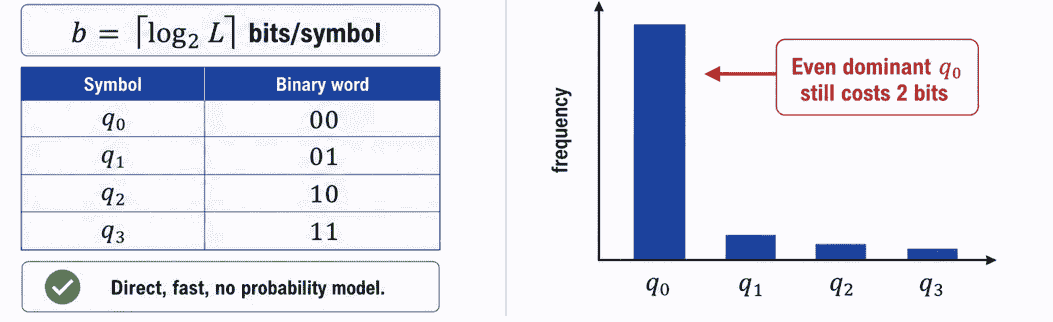
Every outocome costs bits. Total Length
Two design Lessons from Shannon:
- vector source coding is necessary
- Optimal coding depends on the source distribution
Can we approach entropy utilizing data structures ?
Target : a vector code that learns what it needs from the current data vector itself
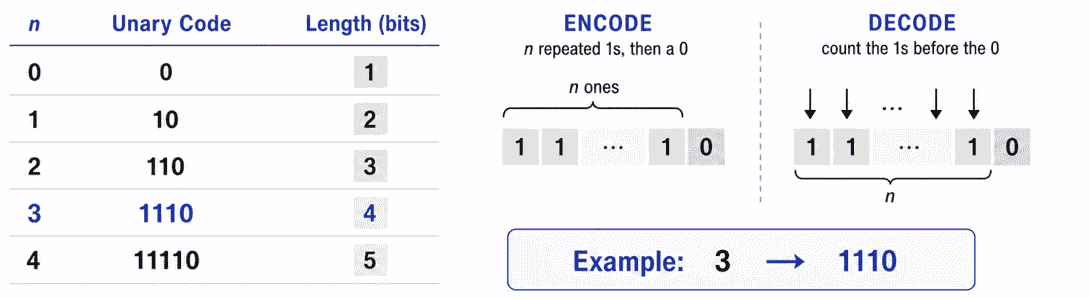
Unary Coding – The simplest variable-length code
Run-Length Coding – Encode Repetition, Not every symbol
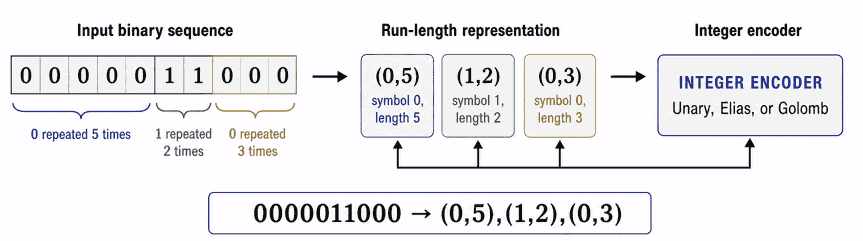
When a sequences are very regular
Powerful when the original have long runs
Elias Gamma Coding - Universal Interger Coding
- For , let
- Write leading zeros followed by the biany representation of
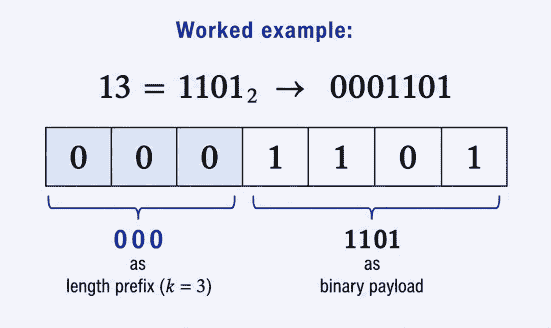
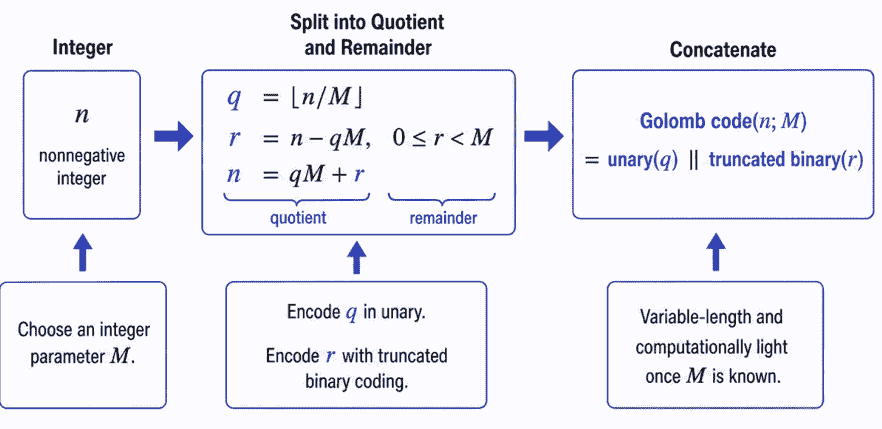
Golomb Coding – Match GEometric Run lengths
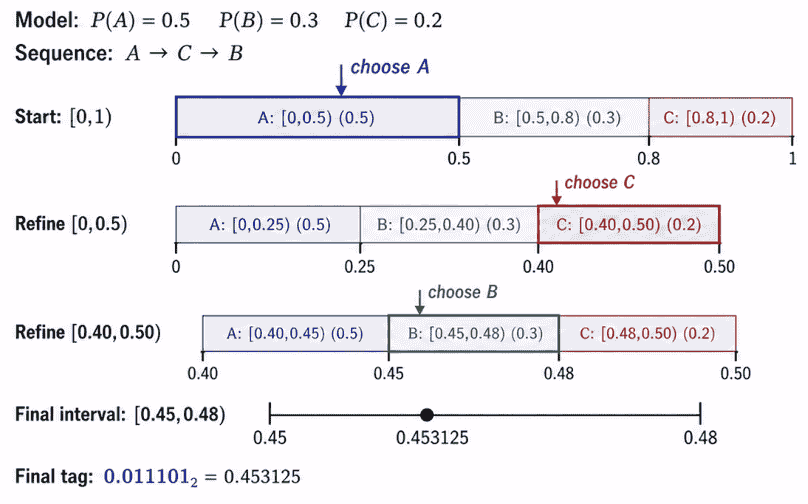
Arithmetic Coding - Encode a Squence as an interval
Huffman Coding - Optimal Symbol - Wise Prefix Coding
- Merge the two least-probable nodes
- Repeat until one hinary tree remains
- Read root-to-leaf paths as prefix free codewords
But changing models require rebuilding or adaptation
The Trade-off of the calssical Schemes
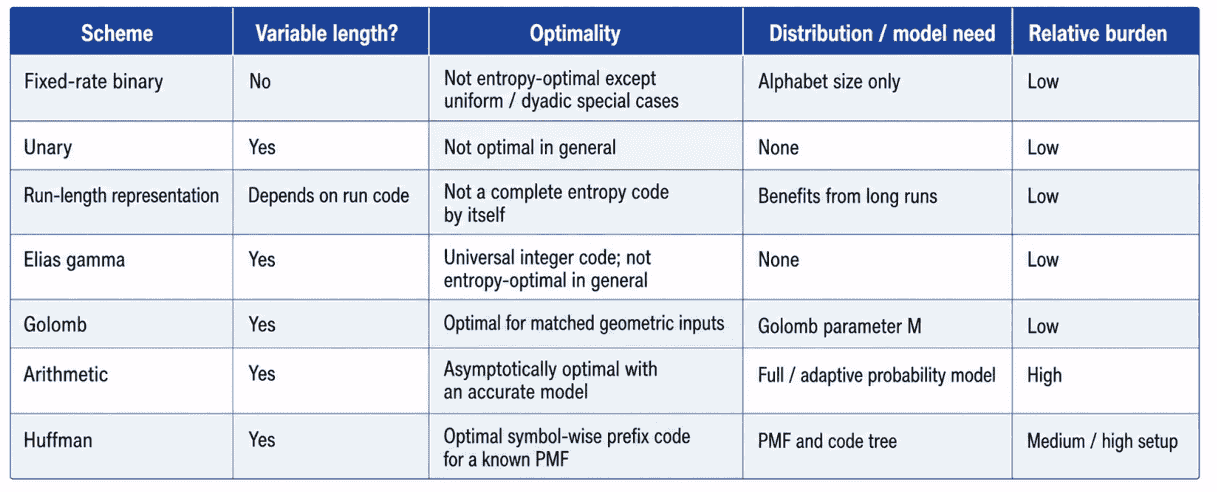
Run-length representation is a transform; its efficiency depends on the run code
Continuous sources - Quantization and Rate-Distortion
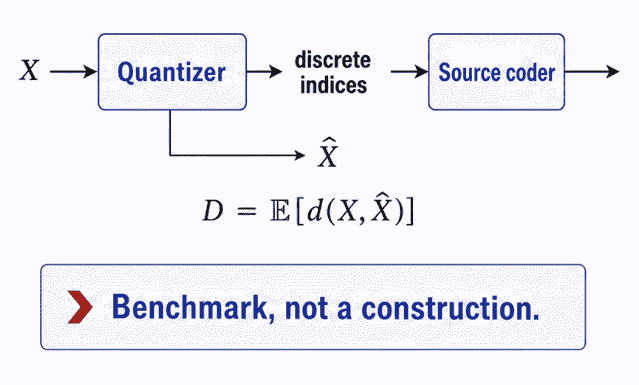
Choose quantization levels thar are accurate
Lloyd’s Algorithm - A practical distortion-minmizing quantize
- Initialize
- assign
- update centroids
- convergence
Proposed Positional Source-Coding Scheme
Discrete System Model and Design Goal
Discrete inputs first -> continuous-valued sources next
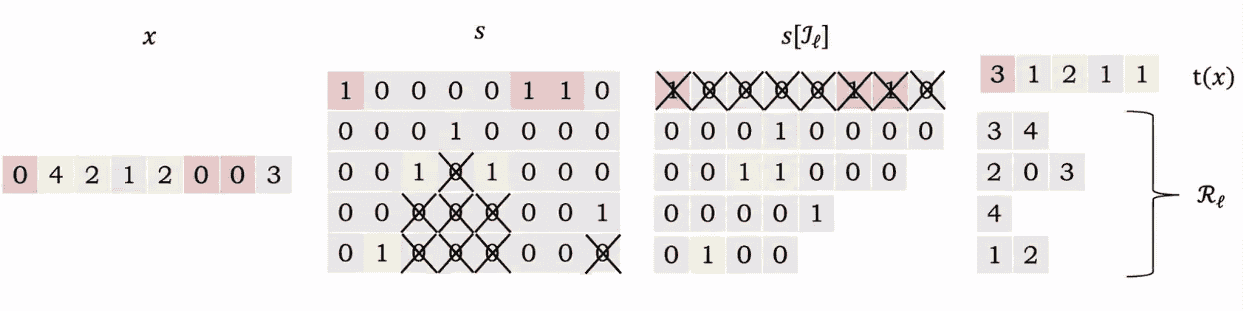
Frequency Information - The Type Vector
Type definition:
The type reveals:
- level ordering
Position Information - One support per value
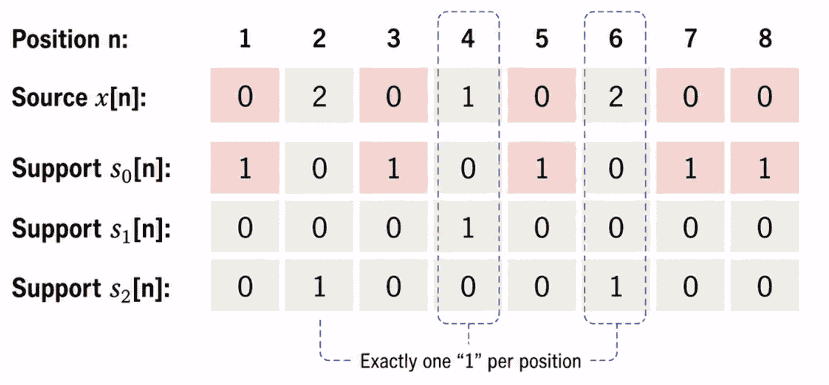
Shrink the supports, then encode their runs
Continuous-Valued Inputs – Quantize for compressibility
Performance Analysis and Numerical Evidence
Theorem 1 - Rate of each indexed support
Empirical types converge to the unknown probablities, so is selected directly from the data
Near Entropy Without a New Codebook
simpler data-derived setup and lower codebook burden - not uncoditional asymptotic dominance
When does the Gap become Small ?
c- Dominant sources
discrete sources - approaching the entropy benchmark
Model Compression for Federated Learning
Real-World Text compression
- Beats Huffman on all six copora
Conclusion and Code-Domain Computation outlook
Takeaway
-
What + where : values that occur – and their positions
-
shrinking supports : exposes run-length structure at every level
-
Lossless + data0adaptive : near entropy under the stated saymptotic model
-
favorable regimes
dominant and sparse outcome distributions
-
Extensions
Quantized continuouss data, models and text
-
Outlook I - Addition directyly on types and supports
-
Outlook II - Multiplication and a research agenda